'Problem Solving'
Creating My Idea
Since I began my Media College course in 2019, I have always wanted to create a documentary about my sister. It was first intended to do it as a personal favour for her as she wanted a video about autism and herself for social workers dealing with the disability. This is what gave me the intention to make it for my FMP Project. Once I had an idea, I created questionnaires for a wide range of aged Audiences, to see what I need to do to make this successful. I asked various questions about types of films, length of films and Autism. My Audience were invested in the idea for a documentary about Autism.
Proposal Form
I decided to extend my research and pitch into a proposal form, to show my full idea. This gave me an opportunity to create a professional form, to help grow my skills in commissioning for my projects, to show producers in the future.
Presentation Pitch
Schedule
Contingency Plans
Coming up with Ideas
In any situation where I had a sudden burst of ideas, I grabbed my phone and wrote them down in my notes. Whether or not I will use all of the ideas is not confirmed yet, but I will be using as much as I can.
'Technical Skills'
Interview Questions
When it came to deciding on questions to ask Steph, for her interview, I focused on what I can ask to get the answers I want. The way I questioned her was mostly based on the subject of her childhood, struggles and family. I also had a section where I decided to ask Steph about our Mother. I did this to attach the two interviews together and to show the audience Steph's support and how even family struggle to understand what Steph needs.
I also included some happy and enjoyable questions into the mix. I did this to make Steph comfortable, the questions were used to get her out of the dark mindset after a heavy question.
Steph has communication and eye contact issues. This means that during the interview, Steph stumbled on words, struggled to come up with extended answers and found it difficult to look into the camera. To solve this, I did multiple takes of each question and gave her examples on what she could say.
Making Documentaries can be unpredictable. Until the day of filming, I will be unsure on the type of answers I can get and what order I should do edit them together. This means that I cannot write a script similar to a film as the interviews are not scripted or organised into an order. I will have to wait until I have my footage to work out the order of the Documentary.
Narration Script
My Narration was based around introducing the interviews, giving facts and figures about Autism and lastly talking about Steph's bullying. It was important to me to show the Audience the impact when someone comments or stares at the visual look of the individual's disability. It makes them socially uncomfortable and it is not nice to be judged over something that is uncontrollable.
This Narration is the most important part of the Documentary as it is where I teach the audience about society and the community. It is a perfect way to sum up and round off the project.
Risk Assessments
For Contingency reasons I have decided to film in only two places. The main filming location is my family's home, this is so if we go into lock down the project wont need to be withheld or delayed. The risk assessment proves that this location is safe for both the cast and crew and the filming equipment. If on the day, the area seems to be to dangerous for the equipment or cast, then I will use my risk assessments to find a solution.
Steph's apartment is very similar to Caroline's home in the fact that it is safe, the only problem is the sound of the main road. There is not much we can do about that apart from moving to another room within the apartment.
Location Layout
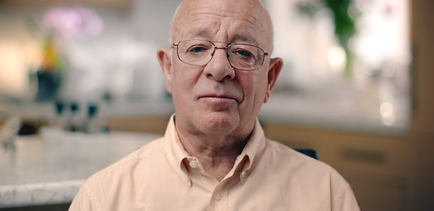

I decided to do a location layout to prepare me for my interviews between Steph and our Mother. I took inspiration from the TV Show, 24 hours in A&E, after watching it the previous night to creating this. The idea is to have a head on shot of the two, to create a heart felt camera technique. Most documentaries use this when talking about a specifically hard subject. I will also be setting up another camera to the side of the pair to overlay the interviews to make it seem less long and dragged out.
24 Hours In A&E
24 Hours In A&E
Moodboard
Production Forms



Location Agreements
Contributor Release Form
Gathering The Forms
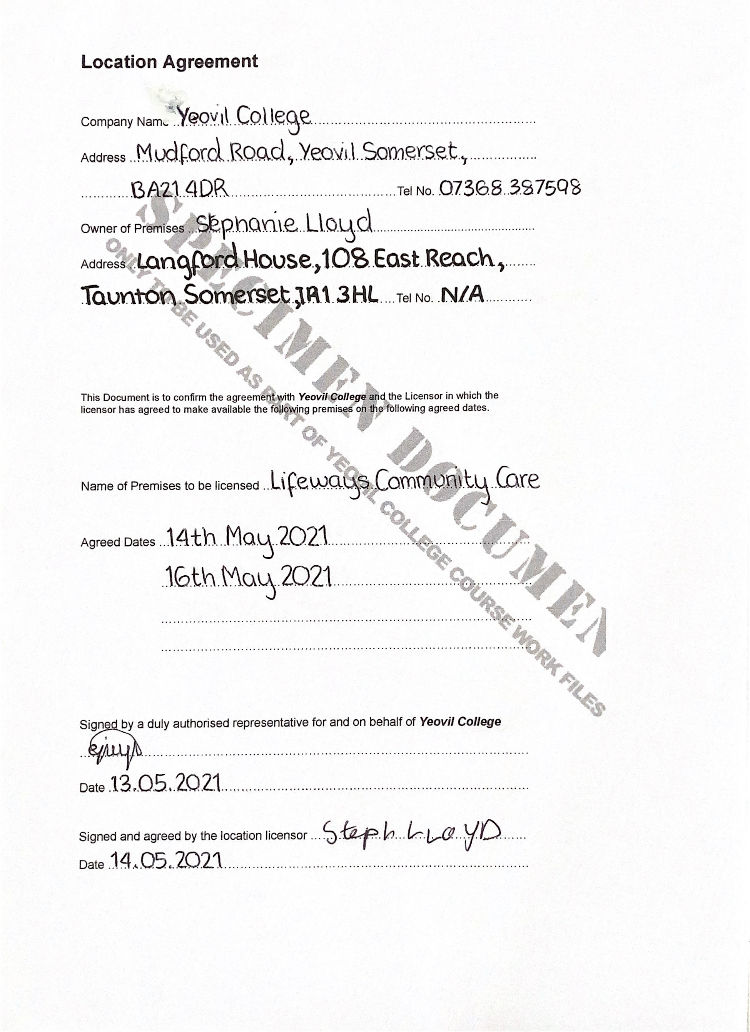
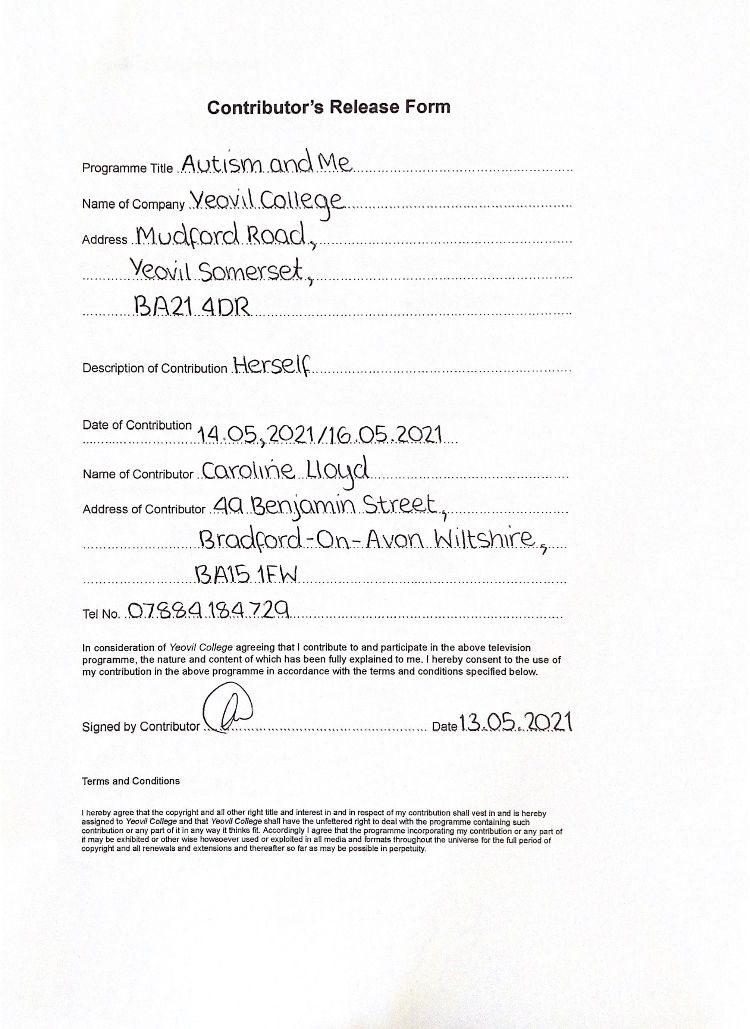
On the day of filming with Steph, I gathered the Location Agreements and Contributor Release Forms as that was the only available day to see her and get them signed. It is important to get these before we began filming for legal reasons. I gathered the other forms: Caroline's Home and Contributor, when I returned home to save time with Steph's filming day.
Props List
Equipment List
In order for me to produce a overlayed interview without having to ask my interviewee to say the same things twice, I filmed using 2 cameras. I decided to use my Father's iPhone 11 as the main camera because the 4K quality worked so well for my previous project. I then used my iPhone 8S for the side profile shot to overlay on top. The difference in quality is obvious in terms of fuzziness, however they are close enough to work in the same scene.
I also used an iPhone tripod, bought by me, to keep the phone in the same place. I did this to keep the Documentary continuous and not contain many cut aways. I used my Father's phone for the tripod, as that is the main camera and then I rested my iPhone 8S on a stack of DVDs on top of a table to the side.


.png)
.png)
iPhone 11
iPhone 8S
iPhone 11
iPhone 8S
Phone Tripod
Storyboard
Post-Production for Autism and Me
.png)
Putting the Documentary Together
I started by gathering the footage I wanted to use out of the fifty odd clips. After, I then put together the interview between Steph and me where we discussed her Autism and life experiences. Once the main part of the documentary was created I moved on to cutting and overlaying my Mother's interview. Within that scene I used various b-roll footage of her hands and side profile. I then went on to gathering footage for the narration scenes. As I ran out of time to film enough b-roll, I picked out videos from Pixabay using the search words "Autism" and "Disability". Mixing the two typed of footage together gave me enough time frame to record all of the monologue and narration I needed.
The start of the Documentary consists of many locations and actions from Steph. I cut the clips to 2 seconds each to keep up with the rhythm of the background music.
The ending scene is my monologue scene. Within that, I discuss the bullying my sister has indulged whilst on screen 10's of comment appear of screen, showing the necessity of the situation. To edit all the comments onto the screen, I over-layed them on top of each other using the additional layers.
Right at the end, the Documentary fades out to the Autism charity symbol and website. I used a fade out, dissolve cut transition.
Finding the Music
I found the music on YouTube audio library. Throughout my Documentary, I wanted my Audience to experience different moods. To do this I picked 6 different songs for each section within my film. On the website, there was an option to filter the music that appears. I put in calm, ambient and happy. When I found a range of music I wanted to use, I cut them down, inserted the music to my edit and faded them into each other using the dissolve transition. The sound was set to music on Premiere Pro and put down to 23% level, enough so its heard but does not overpower the interviews with Steph and my Mother.
Using the Software
After my previous bad experiences with Premiere Rush on editing other projects, I decided this time i will use a different type of software. Now that Covid-19 restrictions have lifted slightly, I have accesss to Yeovil College's computers which contain the better versions of Premiere Pro and Adobe. The only down side to using these was the fact i could not edit at home, I only had accessibility to the software at college. This means that my editing time was limited. I struggled to edit my final product on time meaning i ran out of time to colour grade my project.
'Professional Practice'
Draft Edit
Final Edit
Autism and Me
This is my first Draft edit of 'Autism and Me'. Within the video, the set out of the clips has been finalised but no music, or subtitles, or colour grading has been added. This is because, I needed a rough draft to send for feedback before I can focus and spend time on perfecting the final product. This gives me the opportunity to work out whether or not the order of footage works, the narration is clear and the graphics are timed well.
This is my Finalised edit of 'Autism and Me'. For the thumbnail of this video, I screenshotted the title screen in 4K, then I used the website Canva to perfectly crop the picture to 1920x1080. After gathering feedback on the draft, I was told by many people that the cuts within on clip were not perfect. There was one scene within Steph's interview where she has a 2 second pause before carrying on. My Audience said it was quite distracting, so I cut down the clip to help the fluidity of the scene. I also got feedback on there being no music. For the draft edit, it was intentional that I did nit add music, as I wanted to wait until the length and order of the footage was finalised. None the less, the final edit now has a variety of music throughout. Unfortunately, with me only having access to Premiere Pro at College, meaning my editing time was limited, I did not have enough time for colour grading. Thankfully, it is not necessary, but if I had time, I would like to return to the Documentary and adjust the colour settings to make the clips crisper and more vibrant.
Director's Commentary
Professional Skills Mind Map
To prove my Professional Practice Skills, I designed a Mind Map presenting and explaining the different properties and mindsets you need for a successful project and career. When Beginning this Documentary, I created this mind map to remind me of the different skills I need for a successful grade and film. Although I was working in the comforts of my home with my family, I kept up a professional standard as practice for my future. The flexibility and organisation was crucial to keep me on track for deadlines. As I had no higher figure guiding me, I used initiative and leadership to carry my project and finish it despite the Covid-19 setback. These skills will come with me for when I continue my career or look for employers.
Film Freeway
.png)
With my project now completed and I am happy with the product, I have added my Poster, Trailer, Documentary and Profile to Film Freeway. Film Freeway is a website for small companies or Students to enter their Film Projects for Festivals. At the festivals there are opportunities to win awards but most importantly to receive feedback. Usually people have to pay entry fees up to £100 but because my Documentary includes a disabled person (Steph) I got a free entry. The one I entered is called 'Slamdance Film Festival'. It takes place in America however it does accept worldwide entries. I chose this festival as the company works with AGBO Films which is a Production Company owned by my favourite Director's Joe and Anthony Russo. Even if I do not shortlist for the final awards evening, I am promised feedback, which will be gratefully accepted.